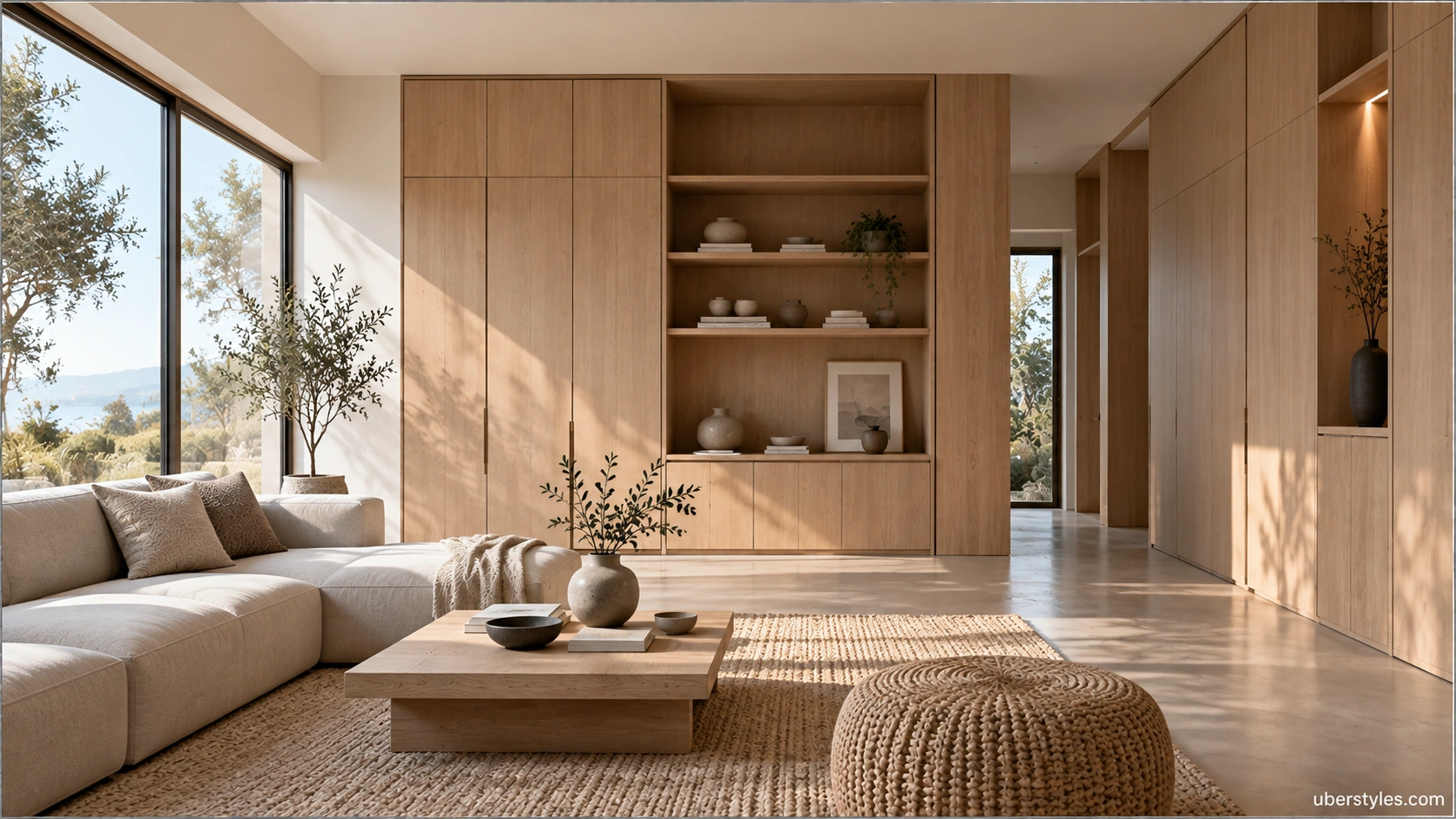
Japandi Storage Architecture brings Japanese minimalism and Scandinavian functionality together to create storage that feels calm, purposeful and beautifully integrated. Instead of adding bulky furniture, it uses concealed built-ins, natural timber and carefully considered proportions to keep modern interiors organised without sacrificing warmth or character.
At its core, Japandi Storage Architecture is about doing more with less. Clean lines, neutral colours, natural wood and intentional layouts create spaces that feel open, comfortable and uncluttered. Concealed cabinets and hidden compartments keep everyday items out of sight, while timber adds texture and warmth to an otherwise minimalist interior.
From floor-to-ceiling cabinetry to custom built-ins and discreet storage furniture, Japandi storage solutions are designed around how the space is actually used. The result is a practical, refined approach to storage that combines visual simplicity with everyday functionality—ideal for homeowners who want a home that feels both serene and effortlessly organised.
⚡ Quick Decision Matrix: Choosing the Right Path
- For a tight budget, prioritize essential built-ins and invest in durable materials where they will be most visible or heavily used.
- In smaller spaces, maximize vertical storage with floor-to-ceiling cabinetry.
- Opt for sustainably sourced materials to align with Japandi’s eco-conscious ethos.
The understated elegance of Japandi storage architecture is not just about aesthetics; it’s about creating a living environment that feels as good as it looks. The decision to incorporate concealed built-ins and unfinished timber is as much about personal style as it is about practical living.
| Primary Benchmark | Integration of minimalistic design and functionality |
| Ideal Application / User | Homeowners and designers seeking a blend of minimalism and warmth |
| Estimated Price / Investment | Varies by room size, materials, cabinetry specification, craftsmanship and installation. |
| Craftsmanship & Material Grade | Premium-grade timber and expert craftsmanship |
| Expected Lifespan / Durability | Long-lasting when properly constructed, installed and maintained. |
Japandi Storage Architecture: Key Design Principles
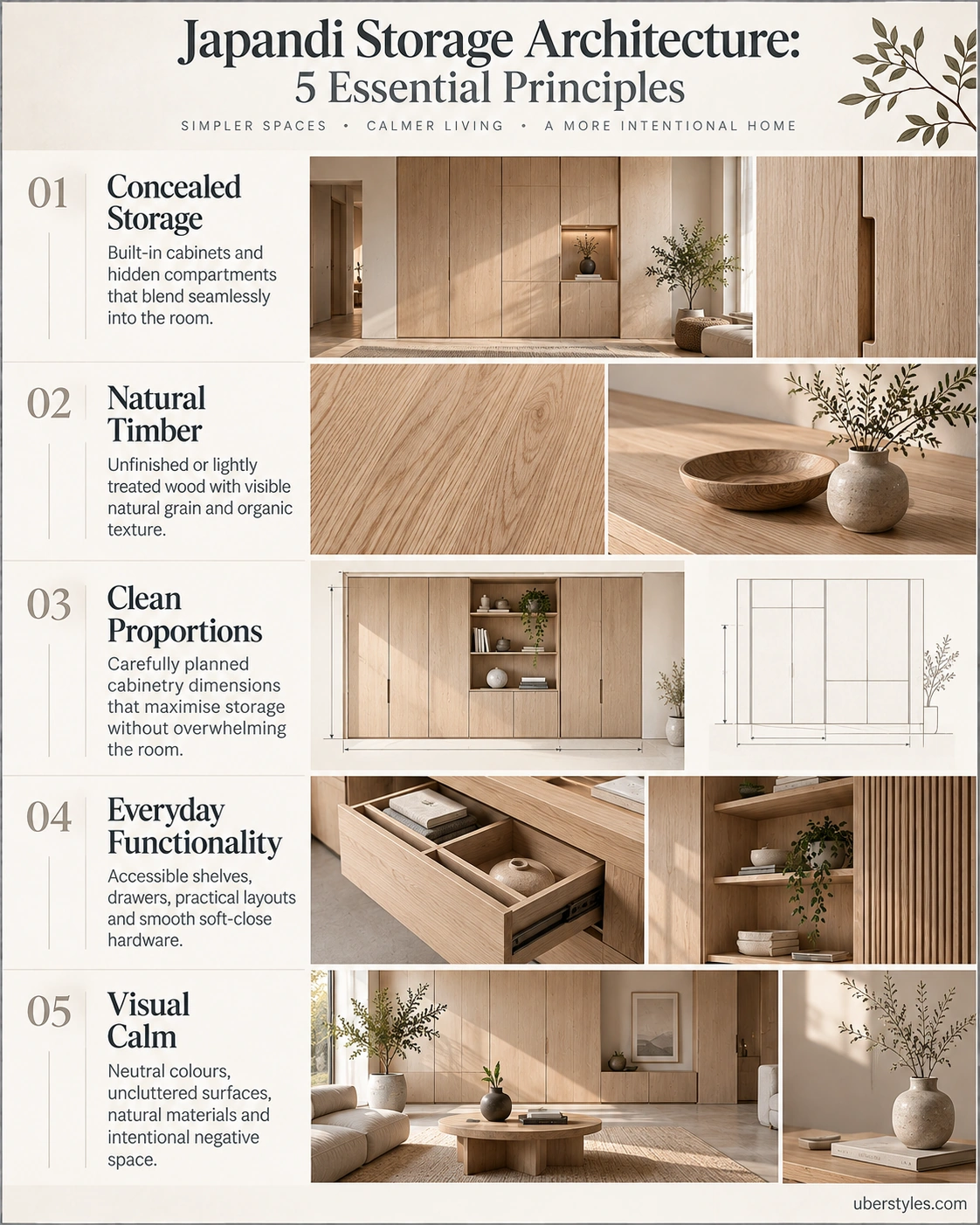
The architectural foundation of Japandi storage is built on the principles of simplicity and functionality. Every element serves a purpose, and the use of space is optimized to create a sense of order and tranquility.
Design Philosophy and Spatial Planning
At the core of Japandi storage architecture is the seamless integration of storage solutions into the overall design of a room. This is achieved through the use of built-in cabinets and hidden compartments that blend into the existing layout, preserving the clean lines and open space that define Japandi interiors.
The choice of materials plays a crucial role in this integration. Unfinished timber, with its natural grain and texture, adds warmth and character to the space. The use of natural materials is a key element of Japandi design, as it connects the interior with the natural world outside.
Technical Specifications
When it comes to technical specifications, Japandi storage solutions are designed with precision and attention to detail. The dimensions of built-in cabinets are carefully calculated to maximize storage capacity without overwhelming the space. Cabinet depth should be determined by the type of storage, available floor space and required clearance. Full-depth cabinetry may suit clothing and larger storage needs, while shallower units can work better for books, display items and narrow spaces.
The choice of timber is also critical. Hardwoods like oak, ash, and walnut are favored for their durability and aesthetic appeal. These woods are often left unfinished or treated with a light oil to enhance their natural beauty. This approach highlights the organic texture of the wood, while the appropriate finish can provide varying levels of protection against everyday wear.
🛠️ Practical Installation Pro-Tip:
When installing Japandi built-ins, ensure that the wood is properly acclimated to the room’s humidity levels prior to installation. This prevents warping and maintains the integrity of the structure over time.
Ergonomics and User Experience
Ergonomics is another key consideration in the design of Japandi storage. The height and placement of cabinets, drawers, and shelves are designed to be easily accessible, ensuring that functionality is not sacrificed for aesthetics. The use of soft-close hinges and drawer slides further enhances the user experience, adding a touch of luxury to everyday interactions.
The result is a storage solution that is both practical and beautiful, embodying the principles of Japandi design.
Craftsmanship, Durability & Common Myths
Japandi storage architecture is a testament to the power of craftsmanship and quality materials. The engineering standards and techniques employed in the creation of these storage solutions are rooted in a deep respect for the integrity of the materials and the craftsmanship involved.
Core Materials and Manufacturing Techniques
The selection of materials is guided by the principles of sustainability and durability. Hardwoods are preferred for their strength and resilience, while the use of natural finishes enhances their longevity and aesthetic appeal. Timber for Japandi storage can be sourced from responsibly managed forests. If sustainability is important, look for credible certification or supplier information that verifies the material’s origin.
Manufacturing techniques are equally important. The construction of built-in cabinets and furniture requires precision and skill, with joints and seams meticulously crafted to ensure stability and durability. Higher-end furniture may use traditional joinery techniques such as dovetails or mortise-and-tenon joints, although construction methods vary by manufacturer, material and project.
Debunking Industry Myths
Despite the growing popularity of Japandi design, there are several myths and misconceptions that persist in the industry. One common myth is that unfinished timber is less durable than finished wood.
A common misconception is that unfinished timber cannot be durable. In practice, carefully selected timber can provide long-lasting performance when properly installed and maintained. However, unfinished or lightly finished surfaces generally require more care and provide less protection against moisture, staining and surface wear than fully sealed finishes.
Another misconception is that Japandi storage solutions are prohibitively expensive. While it’s true that high-quality materials and craftsmanship come at a cost, there are ways to achieve a Japandi look without breaking the bank. By prioritizing essential pieces and investing in quality over quantity, it’s possible to create a serene and stylish space on a budget.
For those interested in exploring a hybrid of minimalist design and practical functionality, Japandi offers a unique solution. Explore more insights on Interior Style and Living & Spaces to discover how Japandi design can transform your living environment.
Cost Breakdown & Strategic Investment Trade-Offs
Investing in Japandi storage architecture is about making informed decisions that balance cost and quality. Understanding the cost drivers and identifying strategic investment opportunities can help you achieve the desired aesthetic without compromising on quality.
Cost Drivers
The primary cost drivers in Japandi storage architecture are materials, craftsmanship, and installation. High-quality hardwoods and expert craftsmanship are essential for creating durable, aesthetically pleasing storage solutions. While these elements can increase the initial cost, they contribute to the longevity and value of the investment.
Installation is another significant cost factor. Professional installation ensures that built-ins are properly integrated into the space, maintaining the clean lines and seamless appearance that define Japandi design.
Strategic Investment Opportunities
One way to manage costs is to focus on key areas that will have the most impact. Prioritizing essential built-ins and investing in high-quality materials for these pieces can create a strong foundation for the design. In areas where budget constraints are a concern, opting for pre-fabricated solutions or using less expensive materials for secondary storage can help reduce costs without sacrificing style.
⚠️ Material & Quality Warning:
Don’t judge cabinetry quality simply by whether it uses solid wood. Check the core material, veneer or laminate quality, edge treatment, hardware, moisture resistance, construction and installation. A well-made engineered panel can be a durable and practical choice for Japandi storage.
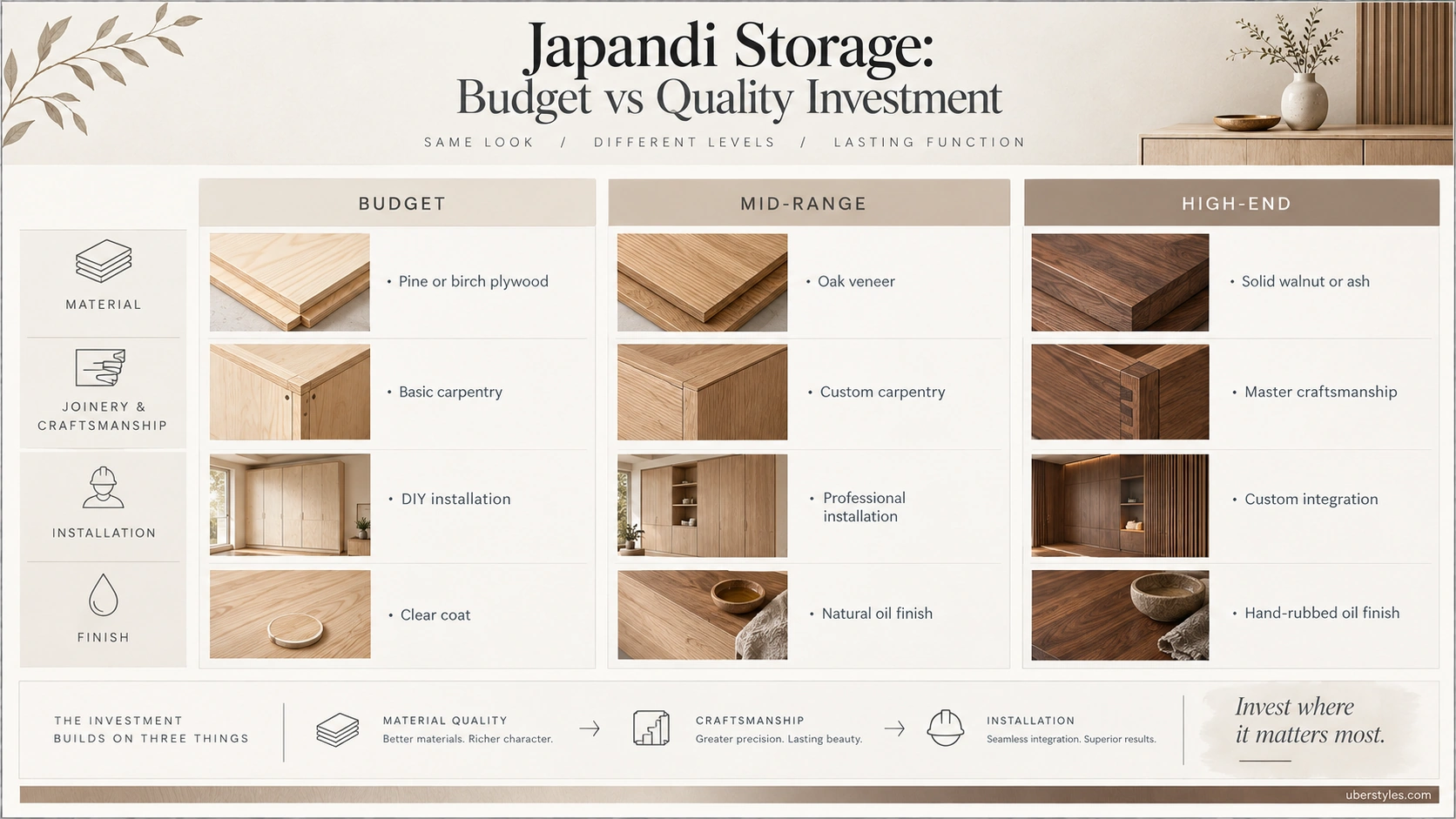
Budget vs. Quality Investment Trade-Off Table
| Component | Budget Option | Mid-Range Option | High-End Option |
|---|---|---|---|
| Material | Pine or birch plywood | Oak veneer | Solid walnut or ash |
| Craftsmanship | Basic carpentry | Custom carpentry | Master craftsmanship |
| Installation | DIY installation | Professional installation | Custom integration |
| Finish | Clear coat | Natural oil finish | Hand-rubbed oil finish |
By carefully considering each component and making strategic trade-offs, you can create a Japandi-inspired space that combines beauty with functionality, all while respecting your budget.
Long-Term Maintenance & Care
Preserving the beauty and functionality of Japandi storage architecture requires regular maintenance and care. Unfinished timber, in particular, benefits from a thoughtful approach to cleaning and preservation.
Practical Maintenance Tips
To maintain the natural beauty of unfinished timber, it’s important to regularly dust surfaces with a soft cloth and avoid harsh chemical cleaners that can damage the wood. Instead, use a gentle cleaner specifically designed for natural wood, applied with a damp cloth followed by a dry one to prevent moisture damage.
Extending the Longevity
Depending on the timber and existing finish, a suitable maintenance oil or product may help protect the surface and enhance its appearance. Always follow the manufacturer’s care recommendations.
By following these maintenance practices, you can ensure that your Japandi storage solutions continue to provide both beauty and functionality for many years to come.
Is Japandi Storage Right for Your Home?
Japandi storage works particularly well if you want a home that feels calm, uncluttered and highly functional. Concealed cabinetry can reduce visual noise, while natural timber adds warmth without relying on heavy decoration.
It may be a good choice if you:
- Prefer clean, uncluttered interiors
- Need substantial built-in storage
- Like natural timber and neutral colours
- Want storage integrated into the architecture
- Value practical design over decorative detail
It may be less suitable if you:
- Prefer ornate or highly decorative furniture
- Want bright, high-contrast colours
- Prefer completely open shelving
- Don’t want to maintain natural timber surfaces
Frequently Asked Questions About Japandi Storage Architecture
What is Japandi storage architecture?
Japandi storage architecture combines Japanese minimalism with Scandinavian functionality, focusing on concealed built-ins and the use of unfinished timber for a natural, serene aesthetic.
Why choose unfinished timber for Japandi storage?
Unfinished or lightly finished timber highlights the natural grain and texture of the wood, helping create the warm, understated character associated with Japandi interiors.
How can I incorporate Japandi storage in a small space?
Maximize vertical storage with floor-to-ceiling built-ins and opt for furniture with hidden compartments to maintain an uncluttered look.
Is Japandi storage expensive to implement?
While high-quality materials and craftsmanship can be costly, strategic investments in key pieces and using budget-friendly options for secondary storage can help manage costs.
How do I maintain the beauty of unfinished timber?
Regular dusting, using gentle wood cleaners, and applying natural oil or wax finishes periodically can protect and enhance the wood.
What are the key elements of Japandi design?
Japandi design focuses on simplicity, natural materials, neutral colors, and functional, intentional spaces.
Can Japandi storage solutions be customized?
Yes, Japandi storage solutions can be tailored to fit specific needs and spaces, often incorporating custom carpentry and installation.
What are the common misconceptions about Japandi storage?
A common misconception is that Japandi storage must use solid or unfinished timber. In reality, different woods, engineered panels and finishes can work well when they suit the design, environment and intended use.
How does Japandi design promote sustainability?
By using sustainably sourced materials and focusing on durable, long-lasting craftsmanship, Japandi design supports eco-friendly practices.
Ultimately, Japandi storage architecture is a celebration of simplicity, functionality, and natural beauty. It offers a timeless aesthetic that transforms spaces into serene retreats, embodying the harmonious blend of Japanese and Scandinavian design.
External References & Further Reading:
- Japandi Interior Design Guide: Elements, Rooms & … – Official Reference
- Japandi Interior Design: The Complete 2026 Guide – Official Reference
- The Complete Guide to japandi Home Decor – Official Reference