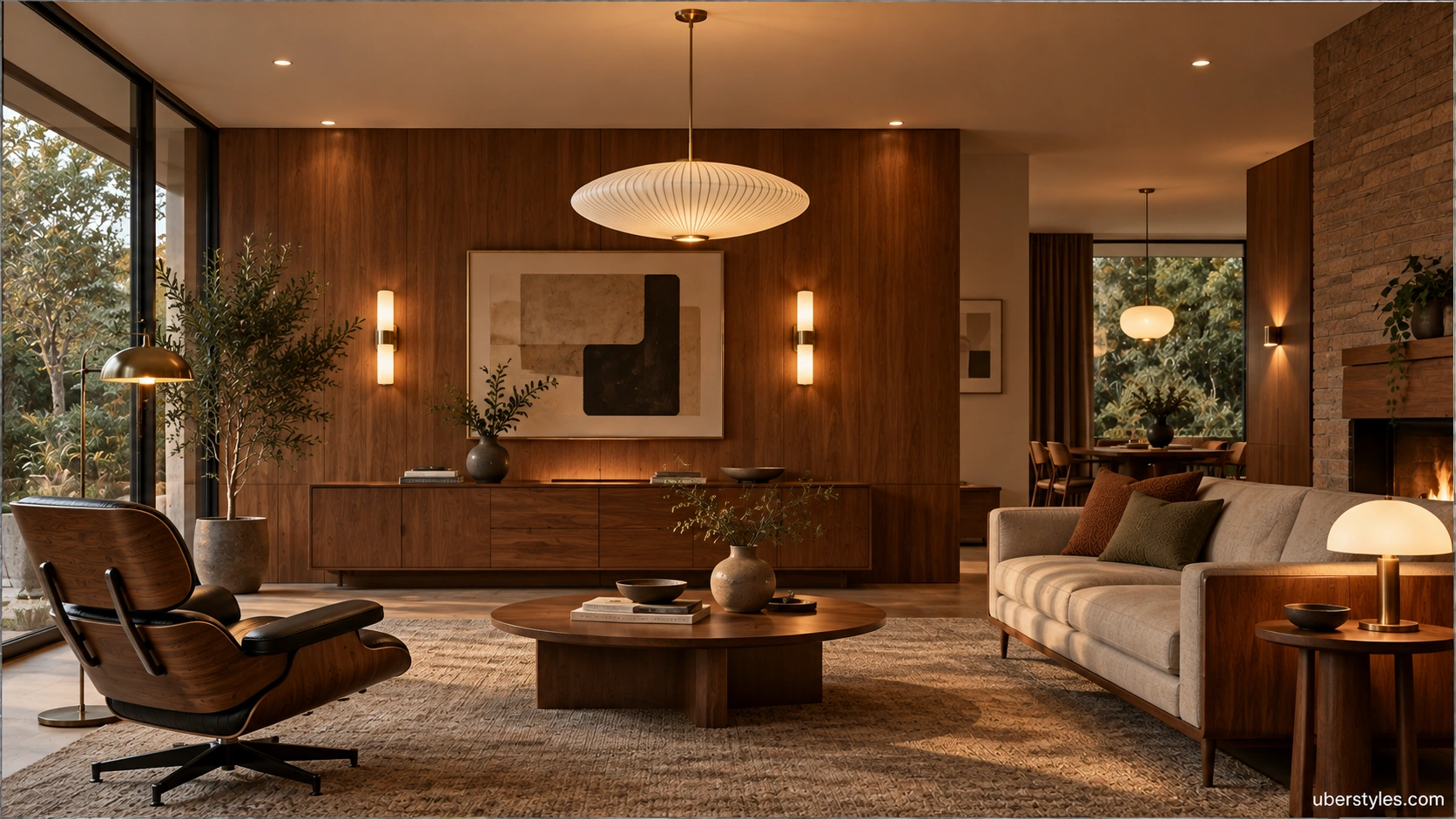
The right mid century modern lighting placement can make a room feel larger, warmer and more intentional—while the wrong fixture height or light level can throw the entire space out of balance. If you’re choosing lighting for a mid-century living room, dining area or architectural feature, start with three things: where the light is needed, how large the fixture should be, and how much light it needs to produce.
Mid-century modern interiors are celebrated for their clean lines, organic curves, natural materials and practical layouts. These qualities also overlap with other design approaches that value simplicity, natural materials and restrained styling, such as coastal minimalist and Nordic Scandi interiors. Your lighting should reinforce those qualities rather than compete with them.
This is where proportion and lumens become important. Proportion determines how a lighting fixture relates to the room, furniture and surrounding architecture, while lumens indicate the amount of light produced. Getting both right helps you avoid common problems such as oversized fixtures, harsh illumination, poorly positioned sconces or rooms that feel underlit.
In this guide, you’ll discover how to approach mid century modern lighting placement with practical guidance on fixture positioning, pendant heights, lumens, materials, safety, costs and maintenance. Whether you’re updating one room or planning a complete lighting scheme, these principles will help you create a space that feels balanced, functional and unmistakably mid-century modern.
⚡ Quick Decision Matrix: Choosing the Right Path
- Opt for fixtures that complement the scale of your space to maintain visual balance.
- Prioritize lighting with adjustable lumens for versatile ambiance control.
- Invest in high-quality materials for longevity and aesthetic integrity.
Lighting design in mid-century modern homes is about more than just aesthetics; it is about creating a functional space that aligns with the era’s ethos of simplicity and efficiency. As we delve into the specifics of architectural lighting, we will explore the technical aspects, from material choices to engineering standards, and debunk myths surrounding this design style. Whether you are new to mid-century modern design or a seasoned aficionado, this guide will illuminate the path to creating a beautifully lit home.
| Primary Benchmark | Lighting fixtures that enhance architectural features while maintaining mid-century aesthetics. |
| Ideal Application / User | Homeowners and designers focused on mid-century modern interior style. |
| Estimated Price / Investment ($ USD) | Varies by fixture type, materials, brand, craftsmanship and installation requirements. |
| Craftsmanship & Material Grade | High-grade metals, glass, and sustainable woods. |
| Expected Lifespan / Durability | Long-lasting when properly constructed, installed and maintained |
Mid Century Modern Lighting Placement: Proportion & Materials
Mid century modern lighting placement requires more than choosing a fixture that looks right. Its position, scale and materials all affect how light interacts with the room and its architectural features.
Fixtures often feature a combination of materials such as brass, steel, teak, and glass, each chosen for its durability and visual appeal. Brass, a popular choice for its rich color and corrosion resistance, is often paired with glass or plastic shades to diffuse light softly across a room. This combination not only can provide durability but also complements the era’s minimalist design ethos.
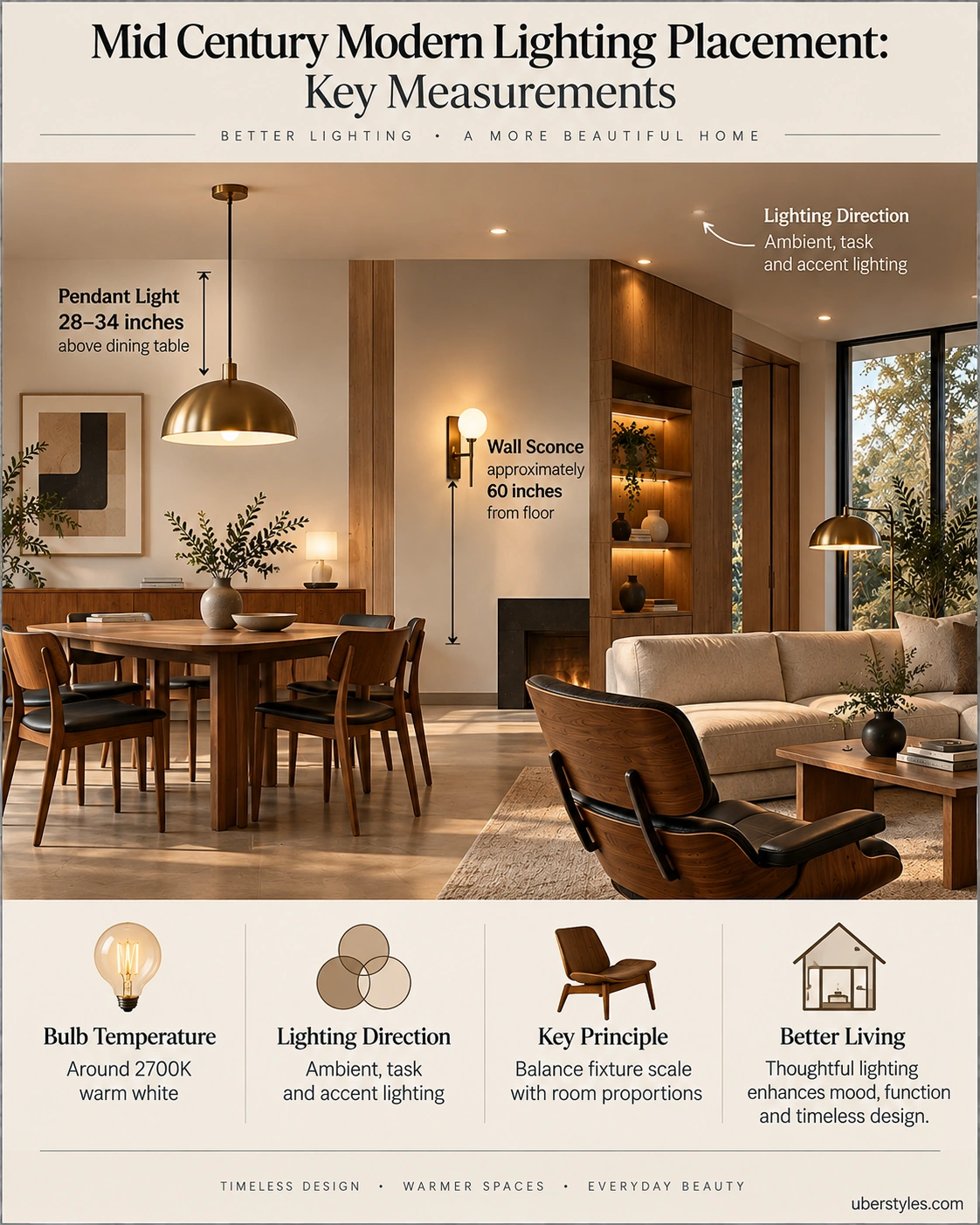
Ergonomics also play a pivotal role in lighting placement. The height at which a fixture is hung, the width of the fixture, and the direction of light are all crucial factors that affect how light interacts with the space. For example, pendant lights over a dining area should be hung 28 to 34 inches above the table to provide optimal light spread without causing glare.
Similarly, wall sconces are often positioned around eye level, with approximately 60 inches from the floor serving as a useful starting point. The final height should be adjusted for the fixture design, room proportions and intended lighting effect.
Lighting placement is also easier to get right when the furniture and storage layout have been considered first, as demonstrated by the relationship between storage, architecture and layout in Japandi bedroom design.
These measurements are an important part of effective mid century modern lighting placement, particularly when fixtures need to work with furniture and architectural features.
🛠️ Master Craftsman Pro-Tip:
When selecting lighting for your mid-century modern home, consider the color temperature of the bulbs. A warm white (around 2700K) will enhance the warm tones of natural wood and textiles typical of the era, creating a cozy and inviting atmosphere.
Materials also affect how light behaves. Polished metals can reflect light, while matte finishes can soften illumination and reduce glare. Understanding these differences helps you position fixtures more effectively for ambient, task or accent lighting.
How Many Lumens Do You Need?
Lumens measure the amount of visible light produced by a bulb or fixture, making them more useful than wattage when comparing modern lighting options. The right output depends on the room, the activity and whether the fixture provides ambient, task or accent lighting.
For mid-century interiors, avoid treating every fixture as the primary light source. A better approach is to layer different types of lighting. Use ambient lighting to provide overall illumination, task lighting where focused visibility is needed, and accent lighting to highlight architectural features, artwork or materials.
The fixture’s shade, beam direction, wall colour and surrounding materials also affect how bright the space feels. In practice, choose the light output based on the room’s function and then adjust the overall scheme through dimming and layered fixtures where possible.
There is no single lumen target for every room; the right output depends on room size, ceiling height, activity, fixture design and whether the light is ambient, task or accent lighting
The key to successful lighting is balancing proportion, light output and placement. Each fixture should suit the scale of the room, provide the right amount of light and support the intended function without overwhelming the space.
Engineering Standards, Craftsmanship & Industry Myths
Lighting fixtures used in mid-century modern interiors must adhere to stringent engineering standards to ensure safety and performance. These standards encompass electrical safety, structural stability, and material quality. For US installations, look for appropriate UL certification or listing where applicable. In other markets, check the relevant local electrical safety certification and installation requirements.
For new wiring or hardwired fixture installations, use a qualified electrician and follow local electrical codes and the manufacturer’s installation instructions.
Craftsmanship in mid-century lighting is characterized by meticulous attention to detail and precision in manufacturing. This era celebrated the blend of artisan techniques with emerging industrial processes, resulting in fixtures that are both aesthetically pleasing and robust. Each component, from the wiring to the bulb socket, is engineered to provide longevity and reliability, requiring minimal maintenance over time.
However, a common myth persists in the industry: that all mid-century modern lighting is overly simplistic or lacks sophistication. This misconception overlooks the complex design principles that define the era. While forms may appear simple, they are the result of careful consideration of balance, proportion, and geometry, creating a subtle elegance that is both timeless and modern.
Interior Style enthusiasts often seek out vintage pieces, believing they possess a higher quality than contemporary reproductions. While it’s true that vintage lighting can offer unique character, modern pieces crafted with current technology can provide enhanced functionality and energy efficiency without sacrificing the mid-century aesthetic. It’s crucial to evaluate each piece on its craftsmanship and materials rather than its age alone.
As with any design investment, understanding the nuances of materials and manufacturing techniques is essential. If long-term material durability is a priority, compare solid brass and plated finishes carefully. Quality, substrate material, plating and finishing processes can all affect durability and appearance over time. Similarly, glass shades should be free of bubbles and imperfections, which can weaken the material and affect light diffusion.
Style Guides & Reviews often highlight the importance of these elements, guiding homeowners in selecting pieces that marry quality with style. By debunking myths and focusing on the tangible qualities that define mid-century modern lighting, homeowners can make informed decisions that enhance their living spaces for years to come.
Cost Breakdown & Strategic Investment Trade-Offs
Mid century modern lighting placement can influence both the look and cost of a lighting project. Understanding the main cost drivers helps homeowners balance fixture quality, installation requirements and long-term value. Understanding the cost drivers can help homeowners make strategic decisions that balance budget constraints with aesthetic aspirations.
The primary cost drivers include material quality, craftsmanship, brand reputation, and design complexity. High-quality materials like solid brass or hand-blown glass command a premium due to their durability and visual appeal. Similarly, fixtures crafted by renowned designers or brands often come with a higher price tag, reflecting the expertise and iconic status they bring.
However, it’s possible to make savvy investments without compromising on quality. For instance, opting for fixtures with a simpler design or those from emerging designers can offer substantial savings while maintaining the aesthetic integrity of your space. Additionally, choosing energy-efficient LED lighting can reduce long-term energy costs and environmental impact, providing a sustainable return on investment.
⚠️ Material & Quality Warning:
Don’t judge fixture quality by whether it uses solid metal alone. Check the base material, finish quality, construction, hardware, electrical components and manufacturer specifications. A well-made plated fixture can still be a practical choice when its construction and finish are appropriate for the intended use.
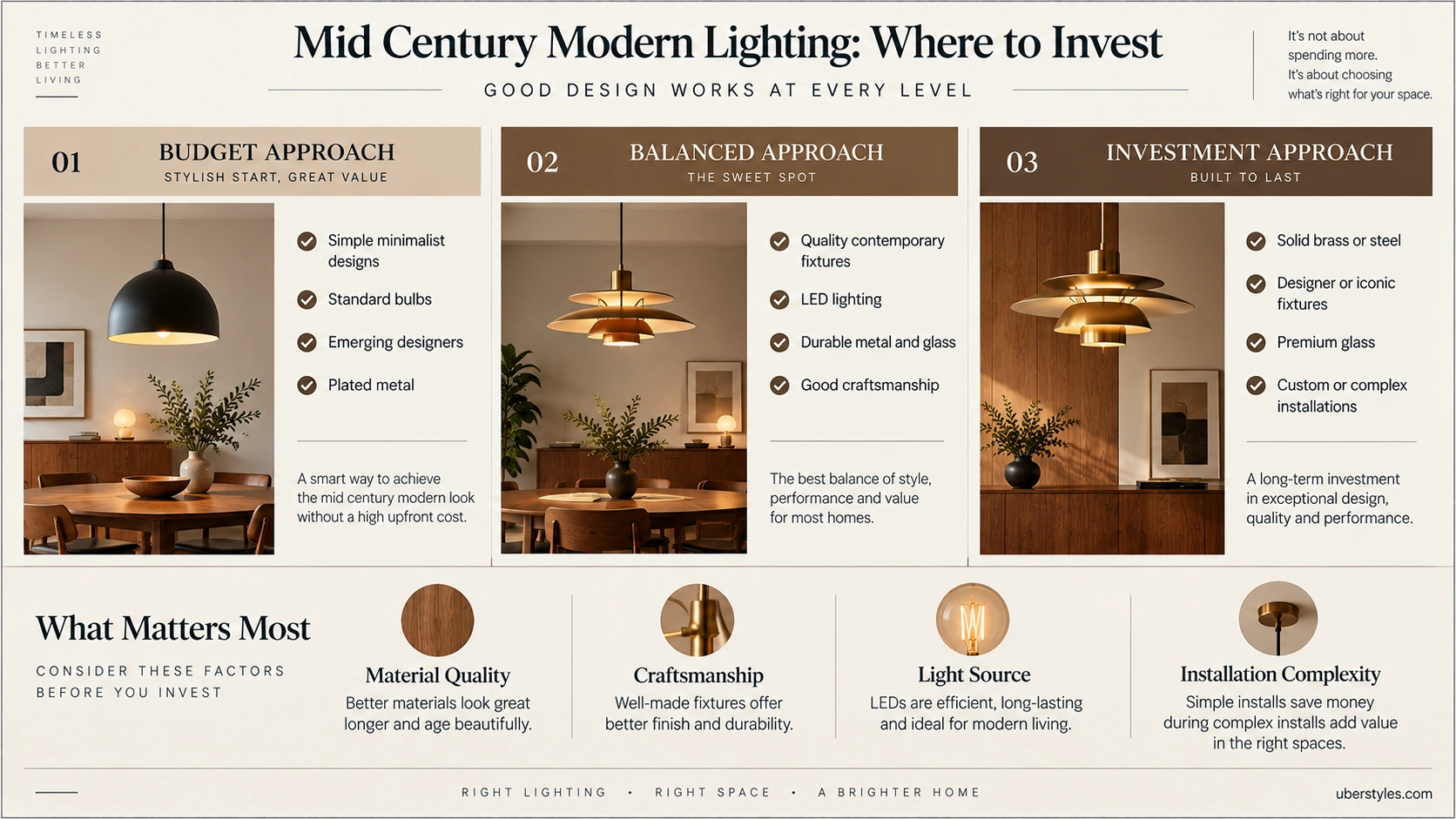
Here’s a breakdown of strategic trade-offs homeowners might consider when choosing mid-century modern lighting:
| Feature | Lower-Cost Approach | Higher-End Approach | Considerations |
| Material | Standard or plated finish | Premium metal construction | Durability depends on the base material, finish, construction quality and intended use. |
| Design Complexity | Simple, Minimalist | Complex, Iconic Designs | Complex designs may require custom installations. |
| Light Source | Standard Bulbs | LED or Smart Bulbs | LEDs offer energy efficiency and longer lifespan. |
| Brand | Emerging Designers | Established Brands | Established brands may offer better after-sales support. |
By carefully evaluating these trade-offs, homeowners can achieve a balance between cost, quality, and style that suits their unique needs and preferences. Whether investing in a statement piece or opting for a more budget-friendly fixture, the key is to prioritize elements that enhance the design and functionality of the space.
Long-Term Maintenance & Care
Maintaining the elegance and functionality of mid-century modern lighting requires attention to detail and a proactive approach to care. Regular cleaning and maintenance can extend the lifespan of your fixtures and preserve their aesthetic appeal.
For metal fixtures, a gentle polish with a soft cloth can remove tarnish and restore shine. Avoid abrasive cleaners, which can scratch surfaces and damage finishes. Glass shades should be cleaned with a mild detergent and warm water, ensuring all residue is removed to maintain clarity and light diffusion.
It’s also essential to regularly inspect electrical components for wear or damage. Where the fixture is compatible, LED bulbs can reduce energy consumption and may produce less heat than some traditional bulb types. Always follow the fixture manufacturer’s specifications.
By prioritizing routine care and addressing issues promptly, homeowners can ensure their mid-century modern lighting remains a focal point of their interior design for years to come, contributing to an inviting and well-lit environment.
These mid century modern lighting placement principles can help homeowners make more confident decisions about fixture height, bulb choice, safety and long-term maintenance.
Frequently Asked Questions About Mid-Century Lighting
What is the best approach to mid century modern lighting placement?
The best approach to mid century modern lighting placement is to balance fixture scale, position and light output with the room’s architecture and furniture. Layered lighting, appropriate fixture heights and warm colour temperatures can create a comfortable and cohesive result.
What is the ideal height for hanging pendant lights in a dining room?
For optimal light spread and to avoid glare, pendant lights should be hung 28 to 34 inches above the dining table.
How do I choose the right bulb for mid-century modern fixtures?
Select bulbs with a warm white color temperature (around 2700K) to complement the warm tones typical of mid-century interiors.
Are vintage lighting fixtures better than modern reproductions?
While vintage fixtures offer unique character, modern reproductions often provide enhanced functionality and energy efficiency without compromising style.
How can I ensure my lighting fixtures are safe?
For US installations, look for appropriate UL certification or listing where applicable. In other markets, check the relevant local electrical safety certification and installation requirements.
What materials are best for mid-century lighting fixtures?
High-grade metals, glass and responsibly sourced timber can work well for mid-century lighting when their quality, finish and construction suit the fixture and intended use.
Can mid-century lighting be integrated into contemporary spaces?
Yes, the clean lines and minimalist designs of mid-century lighting can complement a variety of contemporary styles.
How can I maintain the finish of my metal lighting fixtures?
Regularly polish with a soft cloth and avoid abrasive cleaners to preserve the finish and prevent scratches.
Is it worth investing in designer lighting brands?
Designer brands often offer superior craftsmanship and durability, making them a worthwhile investment for long-term value.
What are the cost considerations for installing mid-century lighting?
Consider material quality, design complexity, and brand reputation as key cost drivers when budgeting for lighting installations.
How can I maximize energy efficiency in my lighting choices?
Opt for LED or smart bulbs to reduce energy consumption and extend the lifespan of your lighting fixtures.
By addressing these frequently asked questions, homeowners can make informed decisions and overcome common challenges when incorporating architectural lighting into mid-century modern living spaces. With careful mid century modern lighting placement, the right balance of proportion, materials and lumens can create a space that feels warm, functional and authentically mid-century.
External References & Further Reading:
- Mid-Century Modern Outdoor Lighting: 2026 Complete … – Official Reference
- Architectural Lighting: Design & Techniques – Official Reference
- Round Table for Lamp: Styling Guide & Size Tips – Official Reference