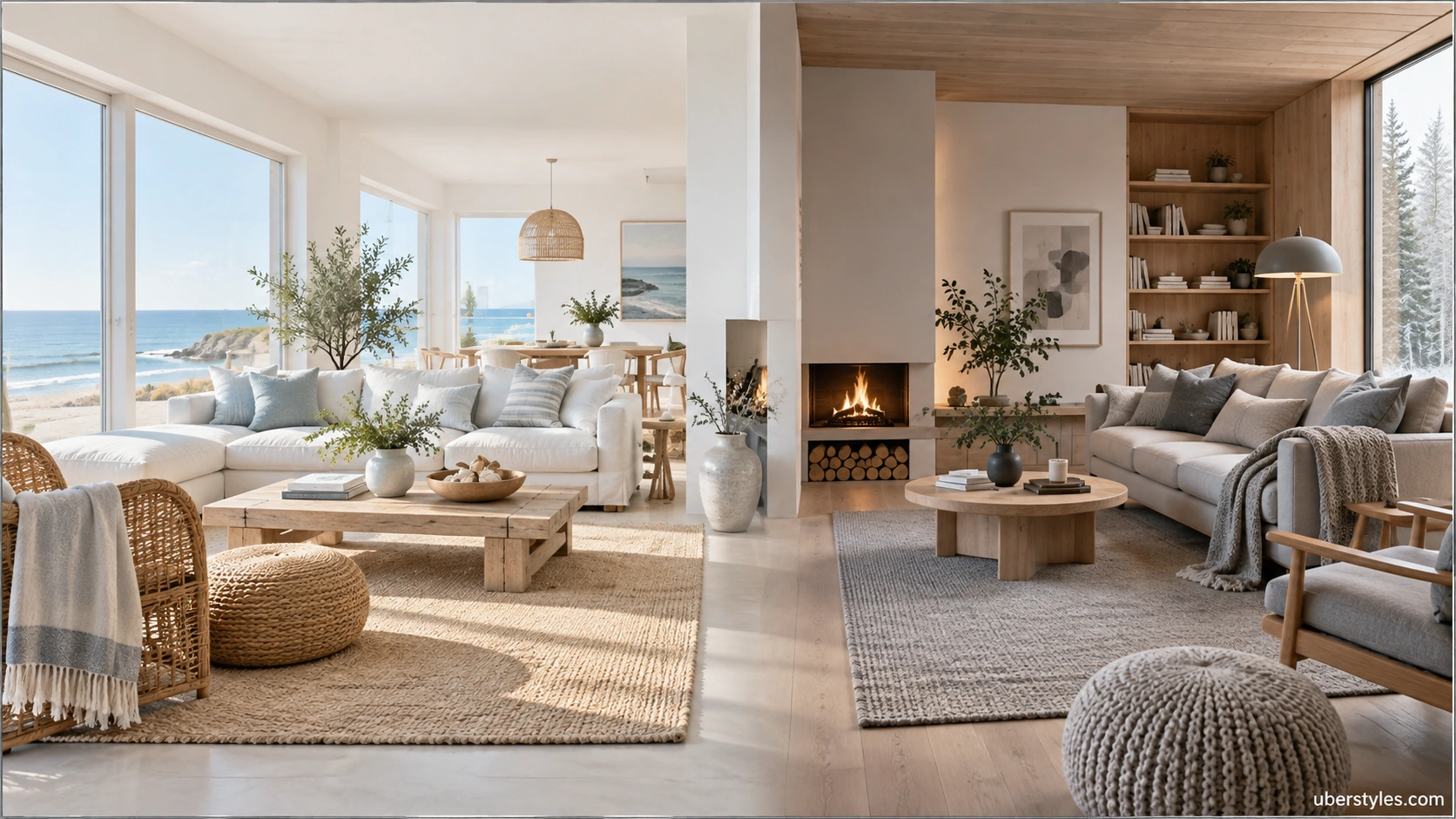
Coastal Minimalist vs Nordic Scandi — which interior style is right for your home?
Both styles embrace simplicity, natural materials, and clutter-free spaces, but they create very different moods. Coastal Minimalist is bright, airy, and relaxed, drawing inspiration from the sea with soft whites, sandy neutrals, natural textures, and plenty of light. Nordic Scandi, on the other hand, brings warmth and function together through natural wood, clean lines, cosy textiles, and thoughtful design.
So, which one fits your space, lifestyle, and budget better?
In this guide, we break down Coastal Minimalist vs Nordic Scandi across architecture, materials, colour palettes, craftsmanship, cost, durability, and maintenance—so you can quickly see the key differences and choose the look that feels right for your home.
⚡ Quick Decision Matrix: Choosing the Right Path
- If your budget leans towards investing in high-quality, sustainable materials, consider Nordic Scandi.
- For smaller spaces requiring a light and airy feel, Coastal Minimalist provides the perfect solution.
- Choose Coastal Minimalist for a casual, beach-inspired vibe, and Nordic Scandi for a cozy, wood-accented retreat.
| Primary Benchmark | Coastal airiness vs. Nordic warmth |
| Ideal Application / User | Homes seeking tranquility and simplicity |
| Investment Level | Varies by space, materials, customisation and structural work |
| Craftsmanship & Material Grade | High-quality, eco-friendly materials |
| Durability | Long-lasting when quality materials and proper care are used |
Coastal Minimalist vs Nordic Scandi: Key Design Differences
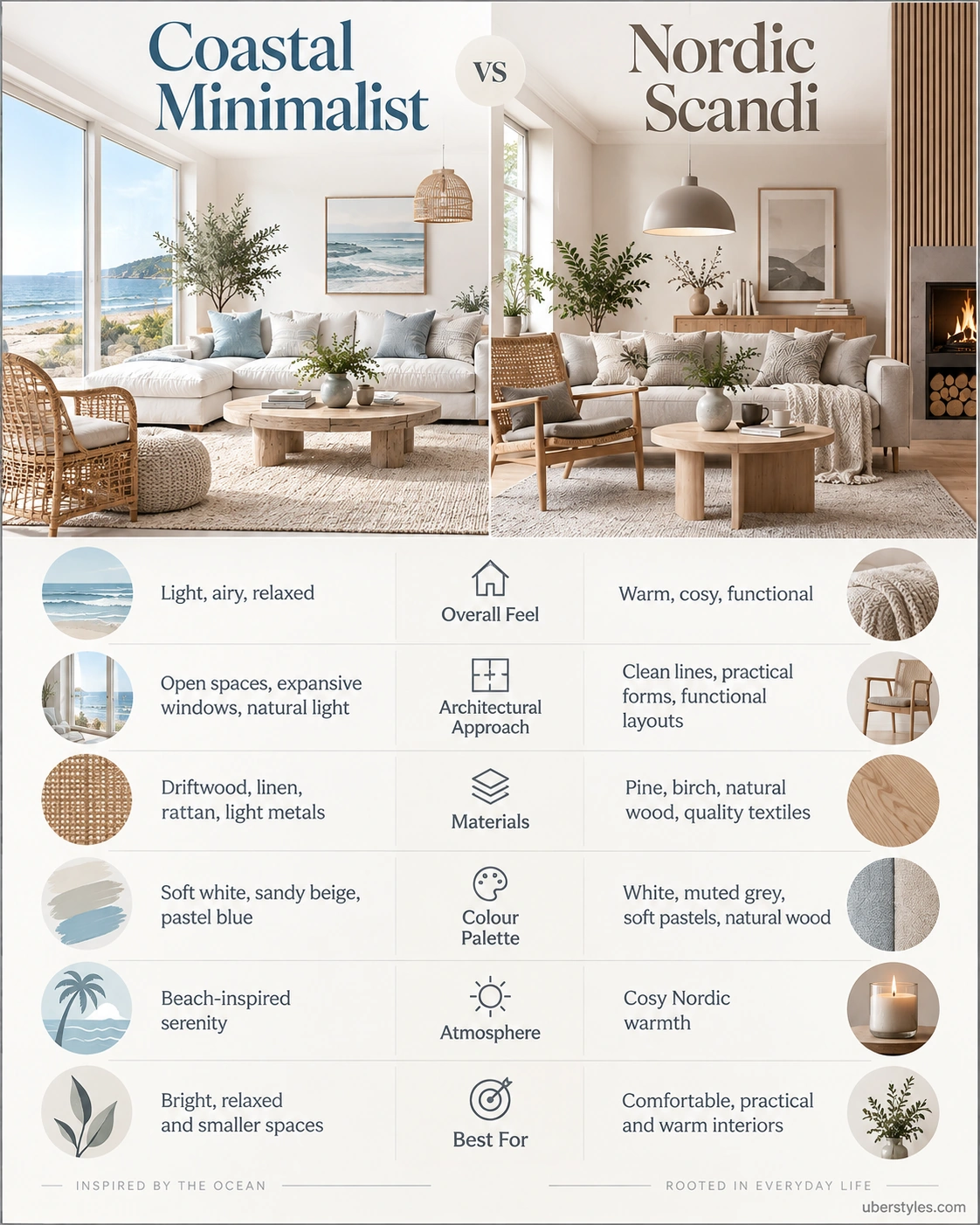
The Coastal Minimalist style draws its inspiration from the sea, emphasizing lightness, openness, and a palette that mirrors the serenity of the ocean. The architecture of Coastal Minimalist spaces often includes expansive windows, open floor plans, and an abundance of natural light. Materials such as driftwood, linen, and rattan are common, offering a tactile connection to nature. The color palette leans towards soft whites, pastel blues, and sandy beiges, creating a calming atmosphere.
Nordic Scandi, by contrast, is heavily influenced by the harsh climates and rich craftsmanship traditions of the Nordic countries. It prioritizes functionality, simplicity, and warmth. The architecture often features sharp lines and functional forms, with an emphasis on craftsmanship and natural materials. Wood, particularly light-coloured varieties such as pine, birch and oak, plays an important visual and tactile role, adding natural warmth and reinforcing the style’s connection to craftsmanship. The color palette is muted, with shades of white, gray, and muted pastels, complemented by natural wood tones.
🛠️ Master Craftsman Pro-Tip:
When selecting wood for Nordic Scandi interiors, opt for sustainably harvested varieties. Look for certifications like FSC or PEFC to ensure you’re choosing eco-friendly options that support responsible forestry practices.
Ergonomically, both Coastal Minimalist and Nordic Scandi interiors prioritise comfort, balance, and a sense of harmony, but they achieve these qualities in different ways. Coastal Minimalist spaces are designed to feel open, relaxed, and naturally connected to their surroundings. Furniture is typically arranged to preserve clear walking paths and avoid visual congestion, while larger windows and open layouts can help create a stronger sense of airflow and spaciousness. The result is an environment that feels calm rather than crowded, making the style particularly appealing for rooms where relaxation and natural light are priorities.
Nordic Scandi interiors take a slightly different approach, combining minimalist planning with warmth and everyday functionality. Furniture is positioned carefully to make the most of available space while maintaining comfortable movement and practical usability. Seating is often paired with soft cushions, throws, rugs, and other textiles that introduce warmth and tactile comfort without overwhelming the clean aesthetic. This balance between form, function, and comfort is one of the defining characteristics of Scandinavian-inspired interiors.
The material choices also create a noticeable difference in how each style feels. Coastal Minimalist interiors often favour lightweight, breathable, and natural-feeling materials such as linen, rattan, light woods, and woven textures. These materials contribute to the style’s fresh and relaxed character while reinforcing its connection with coastal environments.
Nordic Scandi interiors generally use materials and finishes that create a stronger sense of warmth and comfort. Natural woods such as pine, birch, and other light-toned timber are commonly paired with thicker textiles, rugs, upholstered furniture, and layered soft furnishings. These elements help create a cosy environment while maintaining the uncluttered appearance associated with Scandinavian design.
Ultimately, the ergonomic distinction is simple: Coastal Minimalist focuses on openness, airflow, and relaxed living, while Nordic Scandi focuses on warmth, functionality, and cosy comfort. Both can work exceptionally well, but the better choice depends on whether you want your space to feel more like a light-filled coastal retreat or a warm, inviting Nordic home.
Craftsmanship, Durability & Common Myths
The engineering standards for both styles reflect their core philosophies. Coastal Minimalist designs emphasize structural openness and lightweight materials, often utilizing engineered wood and composite materials to achieve the desired aesthetic without compromising stability. Meanwhile, Nordic Scandi architecture prioritizes durability and insulation, with a focus on solid wood construction and traditional joinery techniques.
Craftsmanship in both styles is paramount. Coastal Minimalist furniture often features clean lines and minimal ornamentation, while Nordic Scandi pieces highlight craftsmanship and functionality, often showcasing dovetail joints and other traditional woodworking techniques.
One common misconception is that minimalist designs are inherently less durable. In reality, both Coastal Minimalist and Nordic Scandi styles prioritize quality over quantity, ensuring that every piece is built to last.
Scandinavian vs. Minimalism: Decoding the Cozy & Clean highlights how Scandinavian design combines functionality with beauty, emphasizing the natural beauty of materials and craftsmanship.
Industry Myth vs. Reality Debunk
One prevalent myth is that incorporating either style requires a complete overhaul of existing interiors. However, both Coastal Minimalist and Nordic Scandi can be integrated incrementally, allowing homeowners to gradually transition by focusing on key elements such as color palette, materials, and furnishings.
For more insights on how to incorporate these styles, visit our Interior Style category.
Cost Breakdown & Strategic Investment Trade-Offs
When considering an investment in Coastal Minimalist or Nordic Scandi interiors, the overall cost is influenced by more than furniture and décor. Materials, craftsmanship, structural changes, lighting, customisation, and the quality of finishes can all affect the final budget.
Coastal Minimalist interiors can require a larger investment in natural light and openness. Expansive windows, larger glazed areas, skylights, or changes to an existing layout may be needed to achieve the bright, airy character associated with the style. Natural materials such as linen, rattan, driftwood-inspired finishes, and high-quality light-coloured surfaces can also increase costs, particularly when sourced sustainably or customised for a specific space. However, the style can often be achieved without extensive structural work by focusing on lighter furniture, neutral colours, natural textures, and carefully selected accessories.
Nordic Scandi interiors tend to place greater emphasis on craftsmanship, functionality, and durable natural materials. Quality pine, birch, oak, and other light-toned woods can represent a significant part of the investment, especially when using solid timber, bespoke furniture, or traditionally crafted pieces. Built-in storage, custom cabinetry, ergonomic furniture, and layered lighting can further increase the budget, but these additions also improve functionality and long-term usability.
The biggest difference is therefore where the investment goes. Coastal Minimalist design often puts greater emphasis on light, openness, and breathable materials, while Nordic Scandi design can justify more spending on furniture, woodwork, craftsmanship, and functional details. In both cases, prioritising quality over unnecessary decorative elements can create a more durable and cohesive interior without overspending.
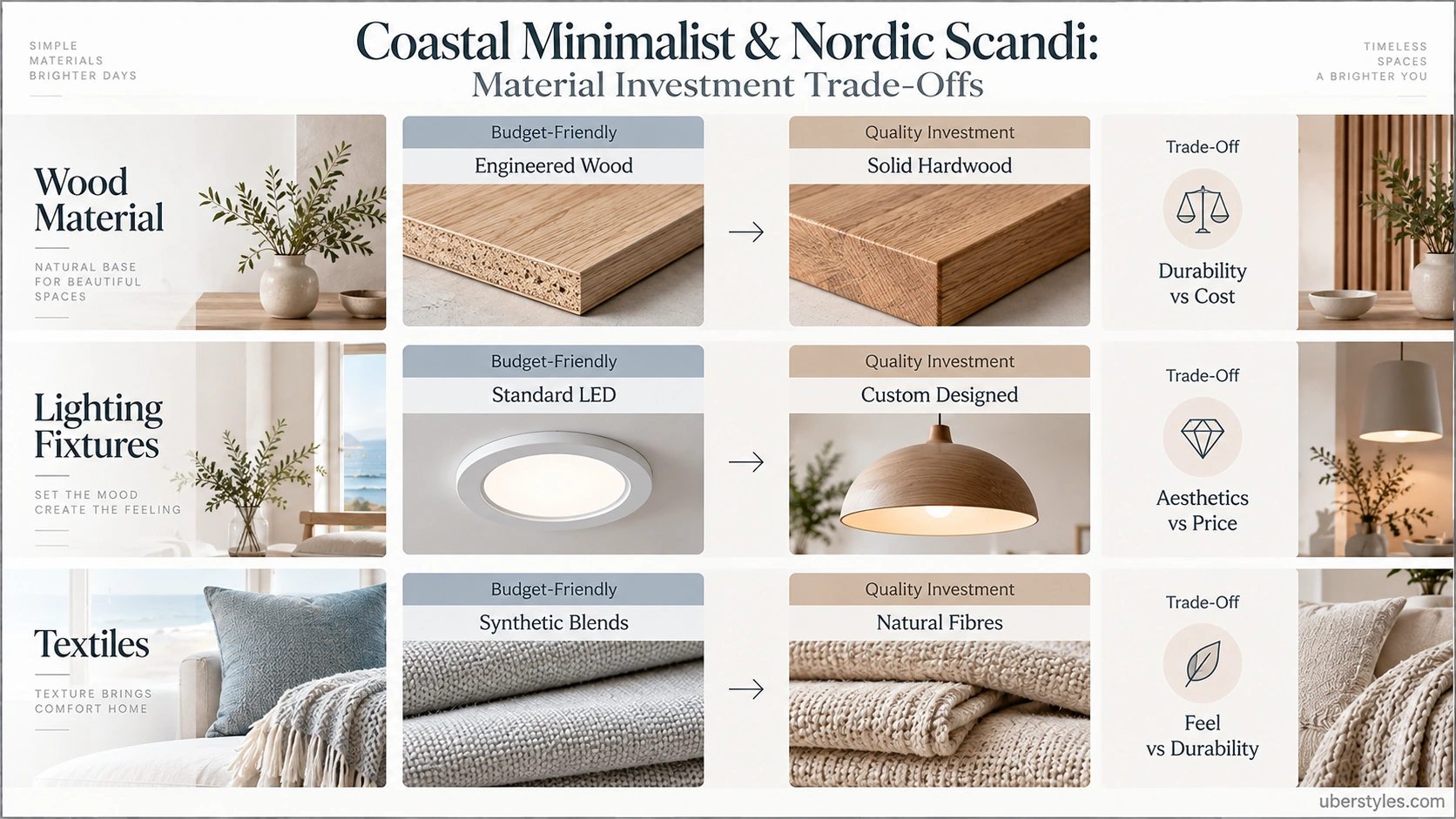
Below is a table illustrating potential budget vs. quality trade-offs:
| Aspect | Budget-Friendly Option | Quality Investment | Trade-Offs |
|---|---|---|---|
| Wood Material | Engineered Wood | Solid Hardwood | Durability vs. Cost |
| Lighting Fixtures | Standard LED | Custom Designed | Aesthetics vs. Price |
| Textiles | Synthetic Blends | Natural Fibers | Feel vs. Durability |
⚠️ Material & Quality Warning:
Be wary of counterfeit materials that mimic the appearance of high-quality wood but lack durability. Always verify the source and authenticity of materials before purchase.
For those interested in further exploring cost-effective design choices, our Living & Spaces section offers additional resources.
Long-Term Maintenance & Care
Maintaining the integrity of Coastal Minimalist and Nordic Scandi interiors requires attention to detail and proper care. For wood surfaces, regular dusting and the application of natural oils can preserve patina and protect against wear. Textiles should be cleaned according to manufacturer instructions to avoid damage.
To prolong the life of your interiors, ensure adequate ventilation to prevent moisture build-up and consider seasonal inspections to address any potential issues with structural elements.
For more maintenance tips, visit our Style Guides & Reviews.
Which Style Is Right for Your Home?
Still deciding between Coastal Minimalist vs Nordic Scandi? The right choice usually comes down to the atmosphere you want to create, how you use the space, and the materials you enjoy living with.
Choose Coastal Minimalist if you want:
- A bright, airy and relaxed atmosphere
- Soft whites, sandy neutrals and subtle blue accents
- Natural textures such as linen, rattan and light wood
- A casual, beach-inspired feel
- An interior that feels open and uncluttered
Choose Nordic Scandi if you want:
- A warm, cosy and functional home
- Natural wood and quality craftsmanship
- Soft textiles, rugs and layered lighting
- Clean lines without a cold or sterile feel
- Furniture and storage designed around everyday living
Can You Combine Both Styles?
Absolutely. A carefully balanced combination can bring together the best of both approaches. Start with the light, neutral foundation of Coastal Minimalist design, then introduce Nordic-inspired wood, cosy textiles and functional furniture.
The result can be a home that feels bright and relaxed without sacrificing warmth and comfort.
Frequently Asked Questions About Coastal Minimalist vs Nordic Scandi: Architectural Distinctions & Structural Palette Analysis
What is the primary difference between Coastal Minimalist and Nordic Scandi?
Coastal Minimalist focuses on light, airy spaces with a beach-inspired palette, while Nordic Scandi emphasizes cozy, functional interiors with natural wood elements.
Can these styles be mixed?
Yes, blending elements from both styles can create a unique space that combines the best of both worlds.
What are the key materials used in Coastal Minimalist interiors?
Common materials include driftwood, linen, rattan, and light metals.
How can I achieve a Nordic Scandi look on a budget?
Opt for quality over quantity, focus on essential pieces, and incorporate natural textiles and budget-friendly wood alternatives.
Are these styles suitable for small spaces?
Absolutely. Both styles emphasize simplicity and functionality, making them ideal for maximizing small spaces.
How do I maintain the natural look of wood in Nordic Scandi interiors?
Regular application of natural oils and avoiding excessive moisture can help maintain wood’s natural appearance.
What lighting is ideal for Coastal Minimalist spaces?
Natural light is key, so prioritize large windows and skylights. Complement with soft, ambient lighting.
Is Scandinavian design always minimalistic?
While often minimalistic, Scandinavian design can also incorporate eclectic elements, focusing more on functionality and craftsmanship.
What is the typical color palette for Coastal Minimalist?
Soft whites, pastel blues, sandy beiges, and light grays are common in Coastal Minimalist interiors.
Can I use bold colors in Nordic Scandi interiors?
While muted tones are standard, bold colors can be used as accents to add interest and depth.
This comprehensive guide should serve as a valuable resource for those looking to distinguish and incorporate Coastal Minimalist and Nordic Scandi styles into their spaces, ensuring a harmonious blend of form, function, and aesthetic appeal.